
Our environmental philosophy begins with the idea that the materials around us are useful, beautiful, and valuable. Los Angeles is home to an enormous urban canopy. Throughout the life of a city, trees are lost to storms, disease, construction, and the natural cycles of growth and renewal. Most of the time, these trees are reduced to wood chips or hauled away as waste. Our practice is an opportunity to approach these materials differently, recognizing the potential for a second life in the form of thoughtful, lasting design.
Sustainability, to us, is about more than sourcing. It is also about what happens after a material enters the shop: The thoughtfulness of approach, how much can be preserved, and whether the finished object is made to last. We believe that the most responsible piece of furniture is one that people value enough to keep, maintain, repair, and eventually pass down for generations to come.
This philosophy has had a direct influence on the way we design. Unlike conventional furniture production, where materials are often selected to meet a predetermined design, our process begins with the material available to us. Every tree has its own history, expressed through its grain, density, knots, checks, and natural movement. These qualities introduce constraints, but they also create possibilities. A bowed slab, an unusual grain pattern, or an irregular off-cut can become the starting point for a fresh perspective, and an artistic design choice. Rather than treating these characteristics as imperfections to be corrected, we allow them to inform the proportions, structure, and final form of each piece. In this way, the material becomes an active participant in the design.
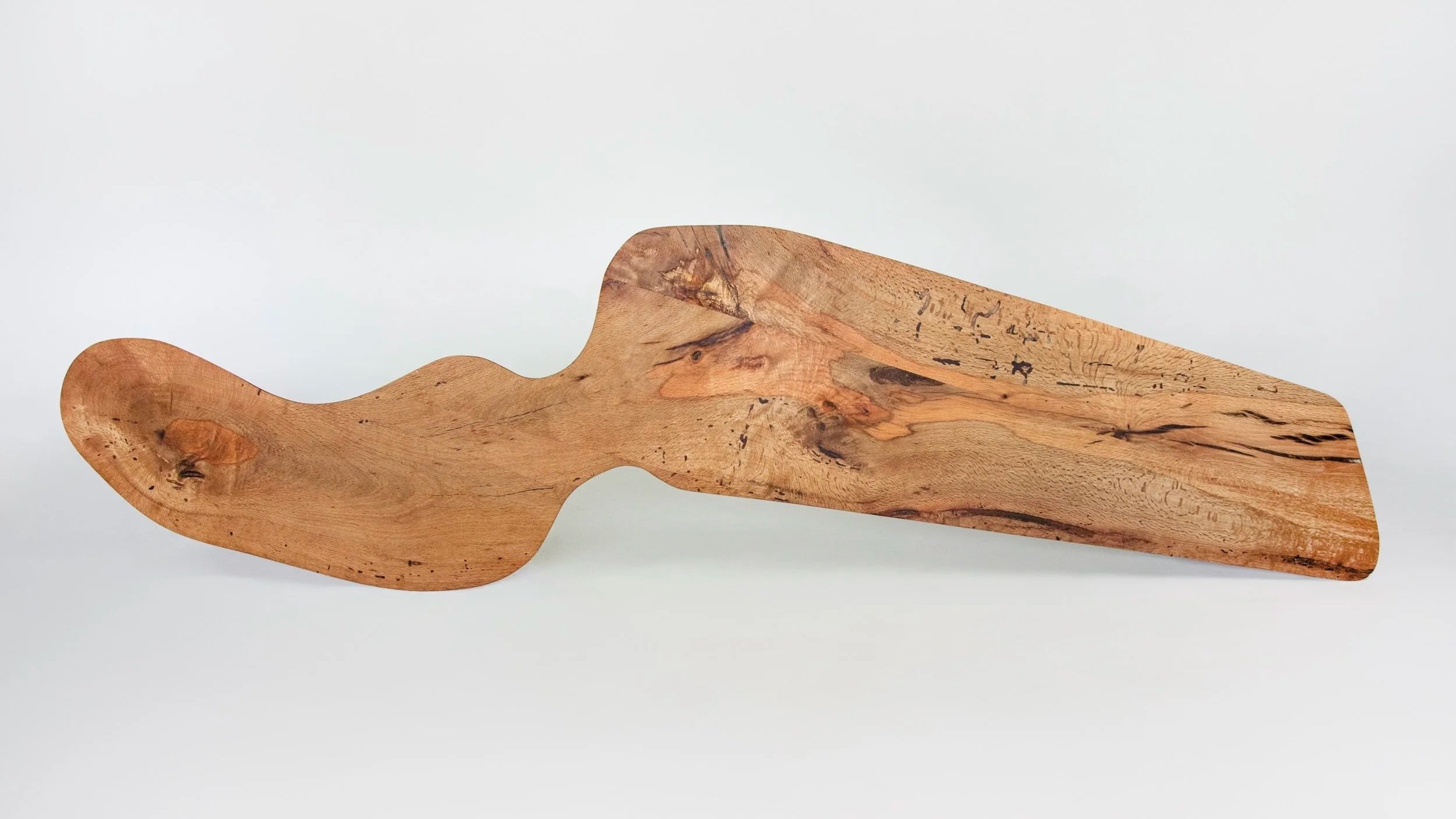
Our work exists at the intersection of furniture design, fine craft, and art. We are interested in the space between functional object and sculptural form, where a piece can serve a practical purpose while also inviting curiosity and appreciation.
We combine traditional woodworking and joinery with digital fabrication techniques, using tools such as CNC milling and water jet cutting to explore new structural and aesthetic possibilities. These methods allow us to work with precision while maintaining the individuality of the material. The result is furniture that is neither purely utilitarian, nor simply decorative, but something that brings both qualities together.
Sustainability is an opportunity for creative experimentation. Working with reclaimed wood means working with an evolving inventory of materials, often in unconventional sizes and shapes. This encourages us to think beyond established furniture forms and find new applications for what might otherwise go unused. Small offcuts become jewelry or sculptural objects; unusual slabs inspire custom tables; reclaimed materials from one project can become the foundation for another. Each challenge opens a new avenue of exploration, making resourcefulness an essential part of our creative process.
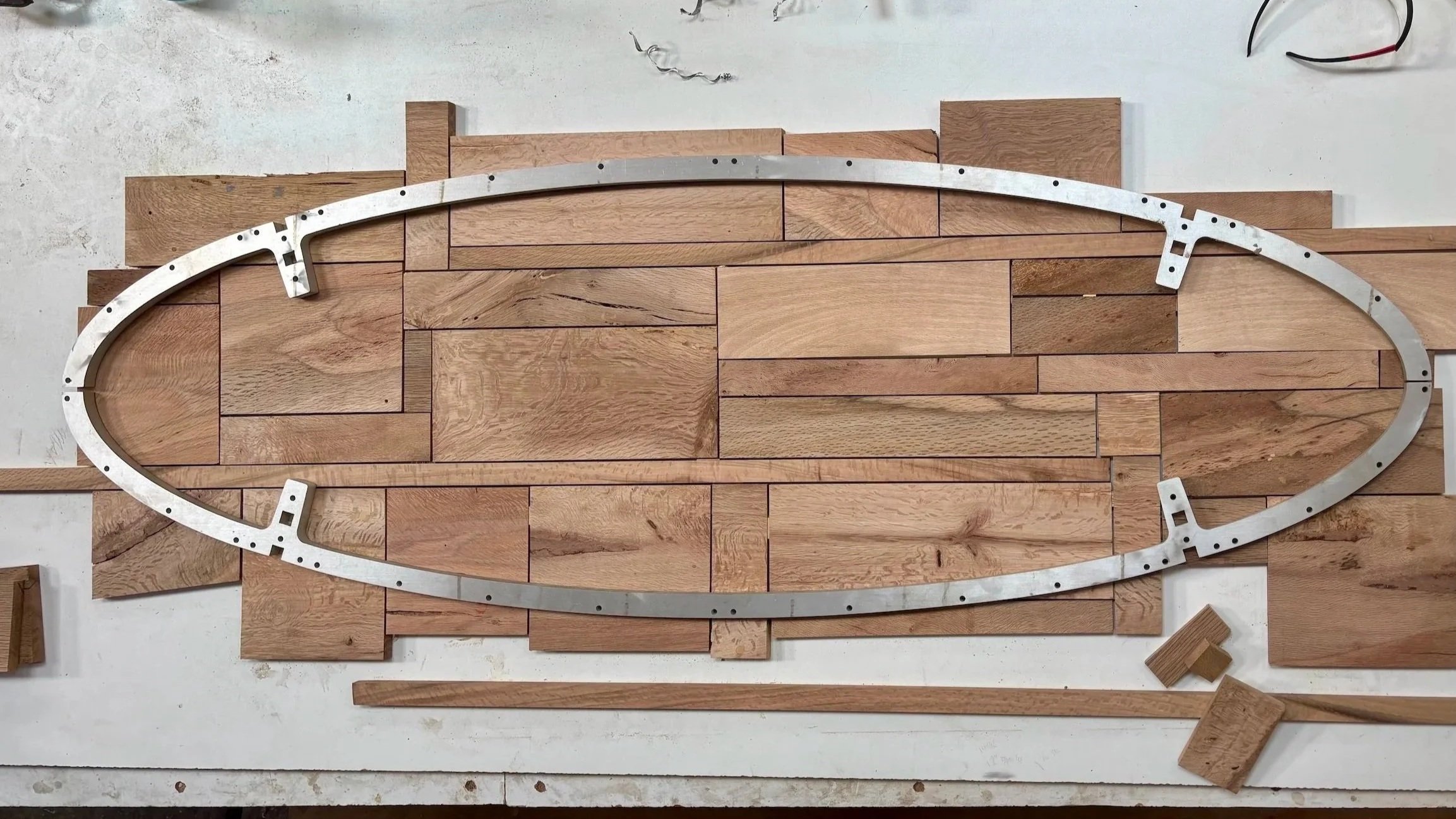
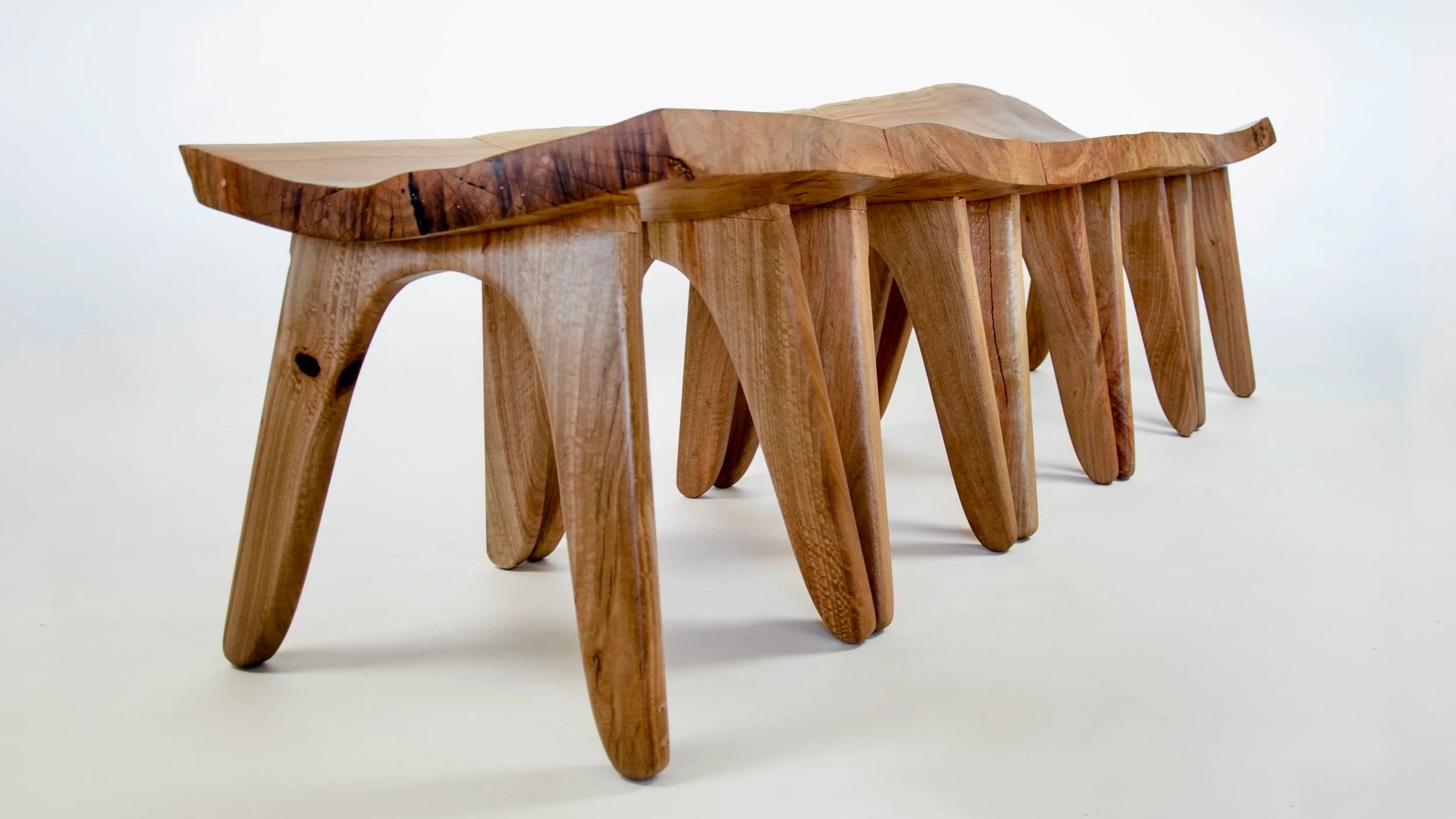
Keita is also a product of the creative and manufacturing community in Los Angeles. We draw on the knowledge of local craftspeople, fabricators, designers, and makers, combining different areas of expertise to bring our ideas into reality. We believe that good design is rarely the work of one discipline alone. It emerges through collaboration, experimentation, and an ongoing exchange between people, materials, and process.
Ultimately, we see sustainable design and good design as inseparable. In fact, the limitations and irregularities of reclaimed materials can lead to more compelling work. By designing in collaboration with nature, honoring the history of our materials, and creating objects intended to remain, we hope to contribute to a more thoughtful relationship between the things we make and the world we make them in.